
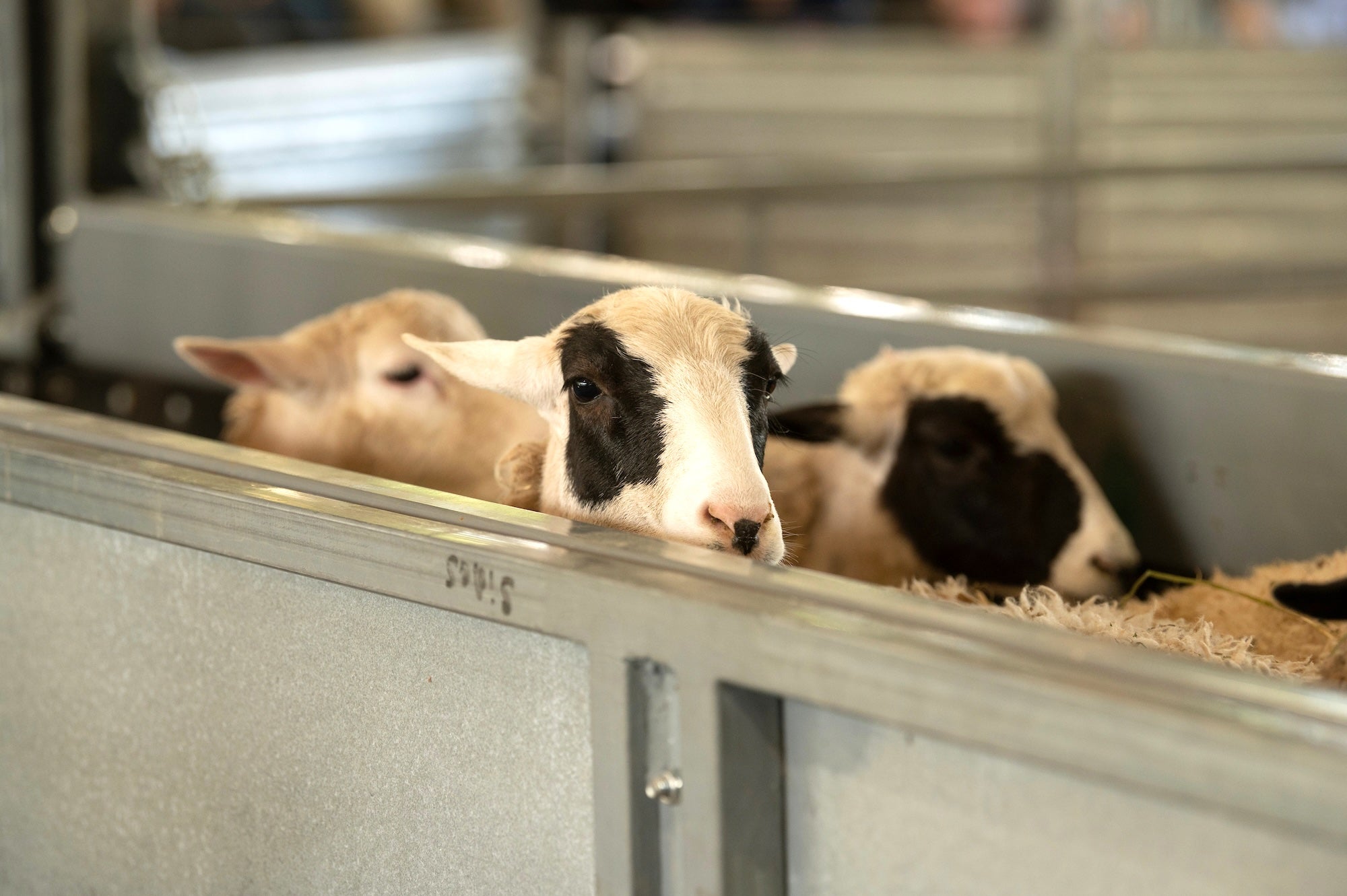
What does the world look like to a cow and why do goats spook so easily? New tools are helping people experience how livestock perceive and respond to their surroundings—leading to safer, lower-stress handling for animals and the people who raise them. UC Davis researchers and veterinarians are bringing these tools to ranchers and others, showing how understanding animal behavior improves welfare in real-world settings. In this episode of Unfold, we explore where science meets the herd.
In this episode:
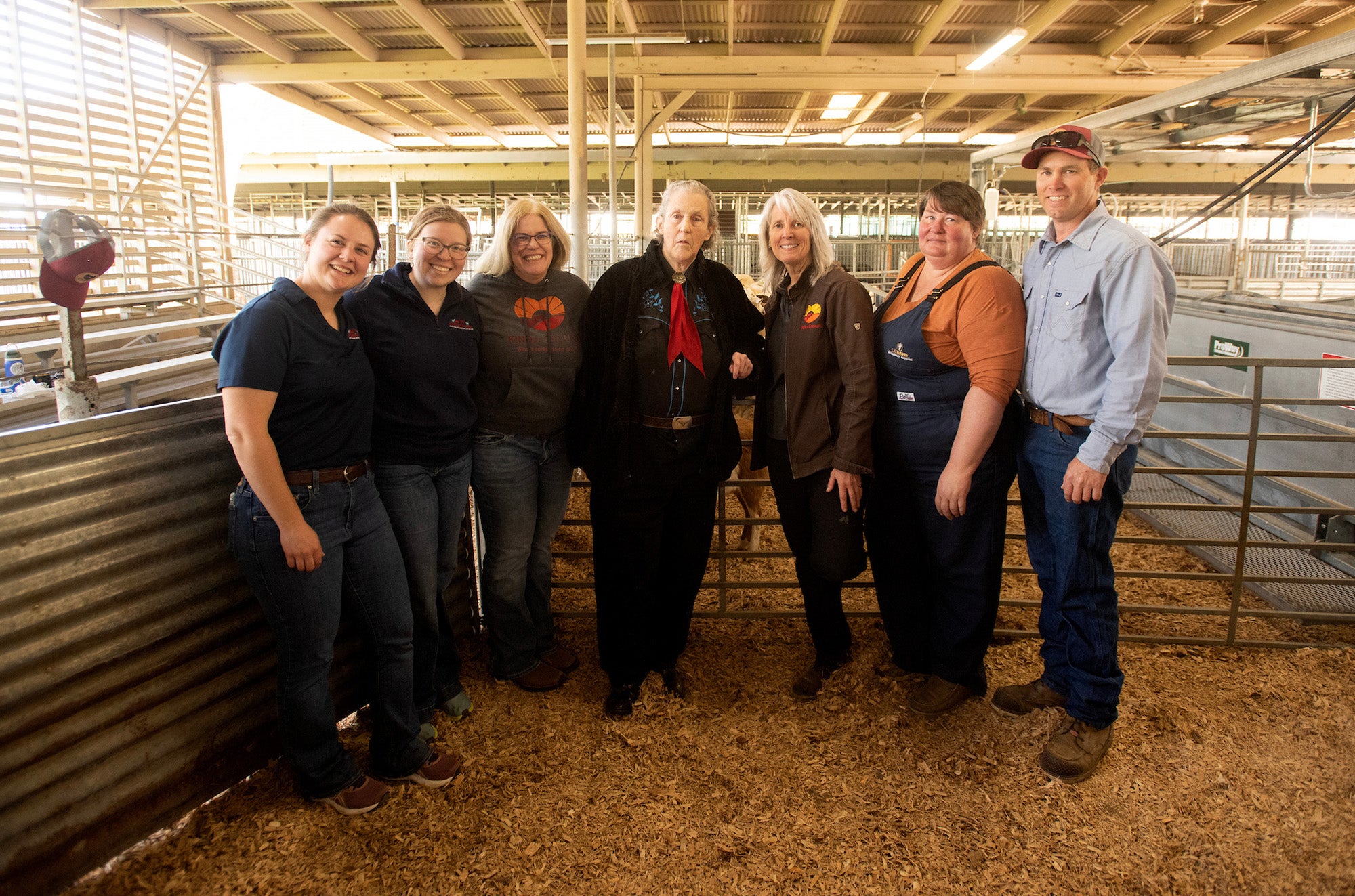
- Cassandra Tucker, professor with the UC Davis animal science department and co-founder of Kinder Ground
- Fauna Smith, assistant professor of livestock herd health and reproduction, UC Davis Weill School of Veterinary Medicine
- Thandi Nixon, third-year veterinary student at UC Davis Weill School of Veterinary Medicine
- Temple Grandin, professor of animal science, Colorado State University
- Jen Walker, co-founder of Kinder Ground and herd health veterinarian
- Nathan Medlar, owner, NM Ranch
- Ashlynn Kirk, program manager for the Humane Handling Institute at the University of Wisconsin—River Falls
Want to see what it looks like through the eyes of a cow?
Transcript
Transcribed using AI. May contain errors.
Amy Quinton
A gate opens. A group of sheep and goats hesitate, then shuffle through. The sheep press into each other, move as a group.
Kat Kerlin
This is an auction ring at the Yolo County Fairgrounds, but the animals aren't for sale.
Amy Quinton
Instead, rancher Nathan Medlar is running them through a new piece of equipment.
Amy Quinton
It's called a bulk handler. At some point, every animal here has to be held still, for shots, exams, for care.
Kat Kerlin
Instead of securing one animal at a time, it handles them in small groups. Nathan says that matters.
Nathan Medlar
The bigger the goat gets, they can get pretty rambunctious if you handle them incorrectly, and they can jump over fences and stuff.
Amy Quinton
Goats especially can be unpredictable, says UC Davis livestock veterinarian Fauna Smith.
Fauna Smith
Goats are like, if the one in there screams because it got an injection, everybody else is like, 'Dude, I'm out of here.'
Kat Kerlin
And when they panic...
Amy Quinton
They jump. They collide.
Fauna Smith
Broken legs would not be uncommon in animals that are trying to jump over solid-sided fences or fences that have gaps in them.
Kat Kerlin
And the bulk handler changes that, says UC Davis animal scientist Cassandra Tucker.
Cassandra Tucker
Sheep, for example, are flocking animals and like to be together and experience some panic or fear when they are isolated. So if we work them one by one, Nathan was seeing flight responses to that. And so what the bulk handler allows him to do is that they're since they're being worked in small groups, they get to be pressed up against a friend, and that has a calming effect.
Amy Quinton
The animals move in together. Their hooves settle between bars at the bottom.
Kat Kerlin
The machine lifts them safely by their bellies, just enough to hold them steady.
Nathan Medlar
We can do 15 to 20 at a time, depending on what we're doing, and I think it's less stressful. The animals are only in there for a couple minutes, but for the most part, the percentage of escapees is a lot less.
Amy Quinton
The work moves faster, calmer. It's a small shift, working with how animals behave instead of against it.
Kat Kerlin
And it's a simple idea. If you can see the world the way an animal does, you can care for it better. It's an idea championed by renowned animal behavior expert Temple Grandin, who we'll hear from in just a bit.
Amy Quinton
In this episode of Unfold, we go to a field day in Northern California where animal welfare science is put into practice. Coming to you from UC Davis, this is Unfold. I'm Amy Quinton.
Kat Kerlin
And I'm Kat Kerlin.
Amy Quinton
This is a field day called Goats and Gates, organized by the nonprofit Kinder Ground.
Kat Kerlin
It brings together ranchers, veterinarians, researchers and students, many of them connected through UC Davis.
Amy Quinton
They're here to see how small changes in livestock handling can make a big difference.
Kat Kerlin
And it's not just about equipment. It's about understanding how these animals experience the world, how they see and react and what keeps them calm.
Amy Quinton
In fact, some of the people there were putting on goggles to try to see like cattle.
Kat Kerlin
It's called cattle vision, and we'll come back to that.
Amy Quinton
For now, back to the ring at Goats and Gates.
Nathan Medlar
When I'm dropping this I'm stopping about six inches off the ground . . .
Amy Quinton
Nathan Medlar guides another group of goats into the handler.
Kat Kerlin
As the goats move into the lift, a smaller one hesitates. It turns sideways.
Amy Quinton
It doesn't always go smoothly, but the goal is to have livestock handling as low stress as possible.
Kat Kerlin
For Nathan, this isn't just about speed.
Nathan Medlar
I don't want to have any injuries. First of all, it's not humane to the animals if we have injuries. And I don't want to lose employees to injuries. I just want a safe environment for everybody, if the animals aren't stressed and it's safe, they're going to perform for you.
Amy Quinton
These animals perform by reproducing and grazing, usually taking out unwanted weeds and vegetation. In California, that work also helps prevent wildfires.
Kat Kerlin
He rotates about 3000 goats and sheep around the state. Again, UC Davis, veterinarian Fauna Smith.
Fauna Smith
It used to take the whole day when we first got this handling system. I went out and did some with Nathan, and I think we got through 400 head in two hours. And that was that's like, a game changer in terms of, like, the amount of time.
Amy Quinton
Nathan was able to purchase the bulk handler with help from Kinder Ground.
Kat Kerlin
Co-founder Jen Walker is a UC Davis alum and a herd health veterinarian. While the bulk handler was an expensive system, Jen says animal welfare doesn't have to be.
Jennifer Walker
You don't have to spend a lot to make things a little better.
Kat Kerlin
For Walker, the bigger shift isn't cost, it's perspective.
Jennifer Walker
We designed systems to work with us. That fit us. We've realized, if we design the system around the cow or the sheep or the pig, it makes our job easier.
Amy Quinton
Many of these ideas trace back to animal behavior expert Temple Grandin with Colorado State University. She says being a visual thinker helped her understand animals.
Kat Kerlin
That shift in perspective has changed not just how animals are treated, but how they perform.
Temple Grandin
It's win-win, because a calm cow gives you more milk. A cow you scream at hit gives you less milk. In beef cattle, cattle that get all agitated during handling, gain less weight.
Amy Quinton
It's one thing to talk about seeing the world through an animal's eyes.
Kat Kerlin
But at this event, people got to try it.
Ashlynn Kirk
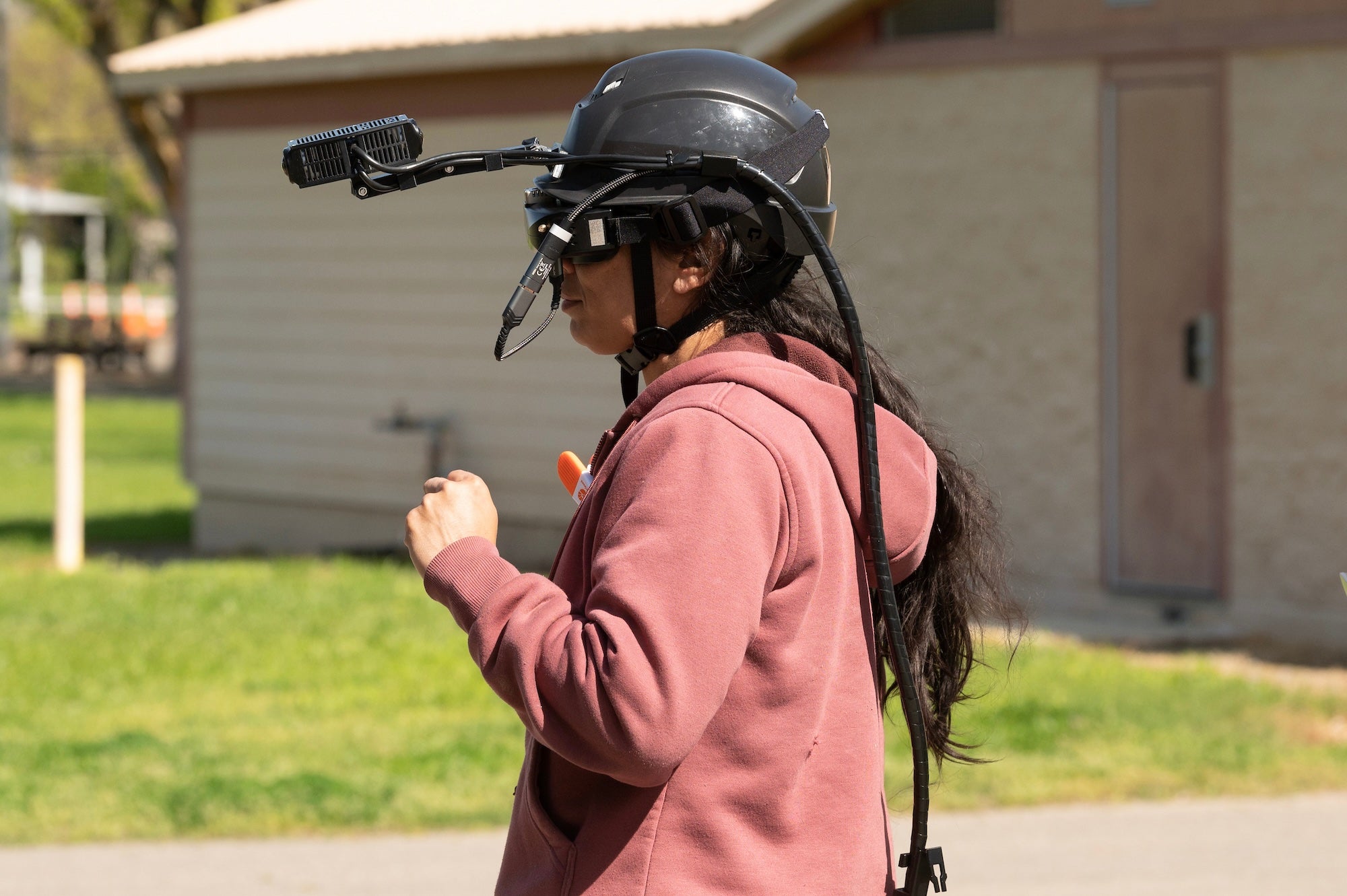
Today, I'm going to talk to you about a technology that allows you to see the world like a cow would. And we lovingly refer to this as cattle vision goggles.
Amy Quinton
And so did I.
Amy Quinton
Ashlynn Kirk is with the Humane Handling Institute at the University of Wisconsin - River Falls, and she's a UC Davis alum. The goggles she's about to put on me look like virtual reality goggles, but they're really augmented reality. They allow you to see 330 degrees around.
Ashlynn Kirk
That is what we think the range of vision that a cow sees. Yes, goats and sheep are very similar.
Amy Quinton
The goggles are attached to a camera at the top of a hard hat I'm wearing. Ashlynn says ruminants also don't see color like humans.
Ashlynn Kirk
They can't really see reds very well, and what you can expect to see is shades of yellows, browns and blues.
Amy Quinton
Then she turns the camera on. This is bizarre. It's like looking through a snow globe.
Amy Quinton
It's not exactly like looking through a snow globe, but it's disorienting.
Amy Quinton
It's blurry in my left, blurry in my right, pretty focused now that you're in front of me. I can see you completely.
Amy Quinton
What really changes is how much movement you can see on the sides and how off your depth perception is.
Amy Quinton
But if I were a cow, I'd be looking down like this, wouldn't I?
Ashlynn Kirk
Yeah,
Amy Quinton
Oh, no wonder I don't move very fast. I sort of saunter. Future veterinarians also got to try on the goggles. Thandi Nixon, a third year UC Davis vet student, walked around in the goggles a lot more than I did.
Thandi Nixon
Is the little like, half circle thing, like, right here in my vision, is that, like, actually, do they have that as well?
Ashlynn Kirk
Yep, that's the blind spot.
Thandi Nixon
That is the blind spot. Okay, that's sucks.
Amy Quinton
Thandi says the cattle vision goggles made her understand, better than a book or research papers, why cattle get spooked so easily, and how they have a flight zone when you get in their personal space. They'll take off.
Thandi Nixon
I thought it was, like, really, really cool, because we always talk about how they perceive things differently, and going through it yourself makes you kind of really appreciate and like, I guess, value a lot of the welfare stuff that we do too, way more.
Kat Kerlin
Amy after trying these goggles, did it change how you think about all of this?
Amy Quinton
Absolutely. I mean, you start to understand how much animals are reacting to what they see, movement, shadows, reflections on puddles, little small gaps in gates, what's happening off to the side. And once you see that, it really makes sense, why handling them differently, works.
Kat Kerlin
Better for them and the rancher.
Amy Quinton
Yeah, and that's the work for UC Davis researchers like Cassandra Tucker.
Cassandra Tucker
We're all interested in really trying to understand how the animals see their world, and how do the management and housing decisions that we make for them, how do they influence those animals? And can we make recommendations or bring evidence that might change our practices to the table?
Kat Kerlin
You can find some photos of the bulk handler.
Amy Quinton
And goats and sheep.
Kat Kerlin
And get a glimpse of those cattle vision goggles.
Amy Quinton
At our website, ucdavis.edu/unfold. I'm Amy Quinton.
Kat Kerlin
And I'm Kat Kerlin. Thanks for listening.
Andy Fell
Unfold is a production of UC Davis. Original Music for Unfold comes from Damien Verrett and Curtis Jerome Haynes. Additional music comes from Blue Dot Sessions.